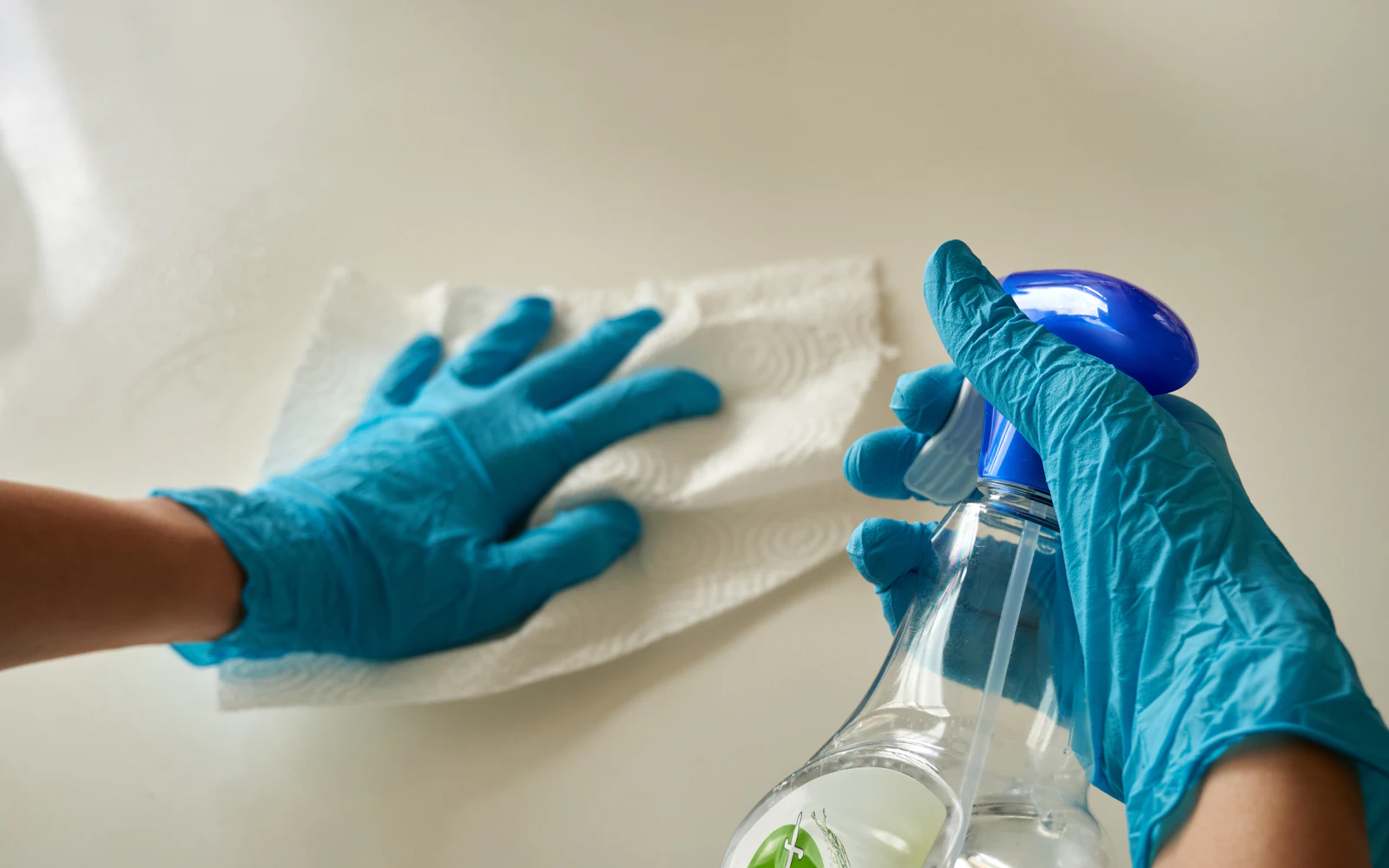
Trauma cleaning covers the aftermath of an accident, an injury, a self-harm incident or a serious illness: anything that has left blood or other bodily fluids in a home, a vehicle or a workplace. It is different from ordinary cleaning because the fluids can carry infection, they soak into soft materials, and what is removed has to be disposed of as clinical waste.
What the crew does
- Looks first. They work out how far fluids have spread, including under flooring and into furniture.
- Protects themselves and the rest of the home. Suits, gloves, eye protection, and a sealed-off work area.
- Removes what cannot be saved. Carpet, underlay, mattresses and soft furniture that have absorbed fluid.
- Cleans and disinfects hard surfaces, then treats the air for odour.
- Takes the waste away as clinical waste, with the paperwork that goes with it.
Where blood-borne risks come in
Blood and some body fluids can carry viruses such as hepatitis B, hepatitis C and HIV. HSE's guidance on safe working sets out the precautions employers must take: protective clothing, eye and face protection where splashes are possible, tongs for contaminated items, and safe disposal. A specialist crew works to that standard every time.
Rooms and items that usually need the most work
- Bedrooms and bathrooms, where most incidents at home happen.
- Carpeted floors, because fluid travels through to the underlay and boards.
- Upholstered chairs and sofas.
- Cars, where seats and headlinings absorb spills.
Paying for a trauma clean
Our estimate from published UK prices runs from about £300 for a short job to £3,500 for a larger one. The biohazard cleaning cost page breaks this down by size, and the cost calculator gives a range for your situation. Check your home insurance before work starts; some policies cover it.
If this has happened in your home, you do not have to sort it out today. When you are ready, the form below only asks for a postcode and how to reach you. Cleaning after a death at home covers a related situation.